

Automation that actually feeds the pipeline.
Automation that actually feeds the pipeline.
We design the lifecycle model, lead scoring, nurture programs and campaign reporting around your funnel before we configure anything in HubSpot. The result is a Marketing Hub setup where campaign activity traces back to pipeline, not just to open rates and click counts.

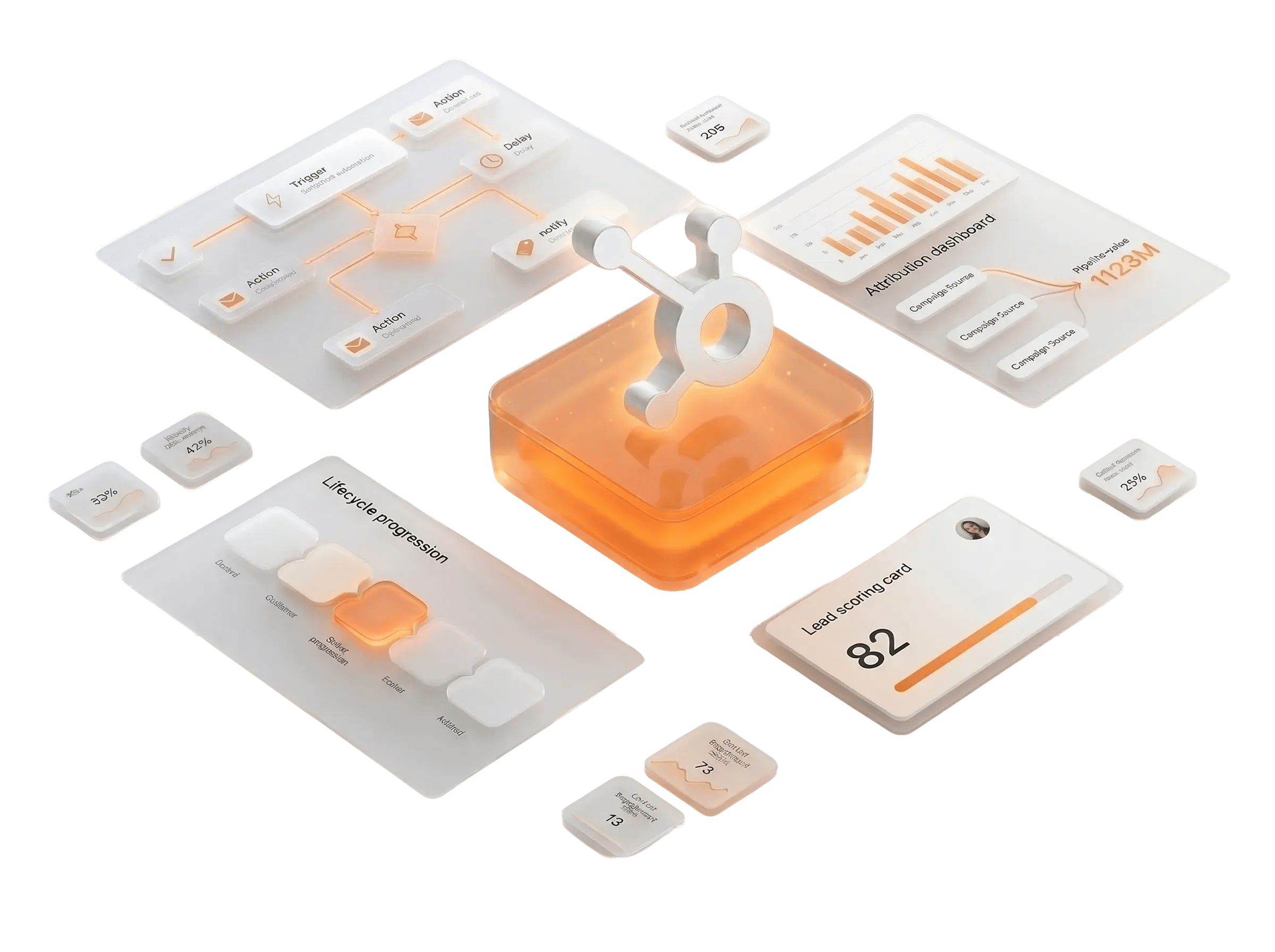

What a HubSpot Marketing Automation build covers

Lifecycle stages and segmentation
The foundation of the system. We define what a lead, MQL, SQL and customer mean in your business, map the stages between them and build the segmentation model your nurtures and reporting run on.
Forms and lead capture
Forms, landing pages and progressive profiling designed to feed the system with clean, attributed data. Every conversion captured with the source context that scoring and reporting require.
Lead scoring
Behavioral and firmographic scoring built around your ICP and what genuinely signals a sales-ready conversation. The model establishes the foundation that predictive and AI-driven scoring can build on as the data matures.
Nurture sequences and email infrastructure
Templates, sender authentication, deliverability setup and nurture logic built to match the buyer's journey. Every sequence is designed to move a lead forward, not keep a send cadence alive.
Workflows and sales handoff
Automation that triggers on the right signals, escalates when it should and routes leads to sales with full context. The pipeline model lives in your CRM. Marketing automation is the engine that drives leads through it.
Campaign reporting and dashboards
Performance dashboards that tie campaign activity back to pipeline. Source attribution, lifecycle progression, conversion velocity and channel performance, visible in one place so marketing can see what's working and leadership can see the pipeline impact.
Who this is for
The automation scenarios we know well
Most marketing automation engagements usually start from one of four places.
You're running email through a broadcast tool or managing leads manually. The marketing motion exists in people's heads, not in a system. A net-new Marketing Hub build stands up the full infrastructure in one engagement: lifecycle model, scoring, nurture programs, sales handoff and reporting, all running from day one.
Mailchimp, Constant Contact and similar tools handle email well enough for a certain stage. They don't handle lifecycle stages, lead scoring or sales handoff. When your marketing motion matures past broadcast email, the platform becomes a constraint. We migrate the email infrastructure forward and build the automation layer around it.
Marketo, Pardot and Eloqua are built for organizations with dedicated marketing ops teams and the budget to match. Companies move off them when cost outpaces value, when they want Marketing Hub closer to their CRM, or when maintaining the platform absorbs more than the team can sustain. The programs rarely map cleanly from one platform to another, so we treat it as a rebuild with migration, not a straight transfer.
Two organizations merge. Both had marketing automation. Now there are two contact databases, two scoring models and two sets of programs measuring different things. We audit both systems, rationalize what carries forward and stand up a unified model that works for the combined go-to-market motion. The technical work is heavier than a standard build. The result is the same: one system the whole team uses.
The RAB2B difference
Marketing automation designed by the agency that builds the rest of the system.
Most HubSpot partners configure the workflows you ask for. They'll set up nurtures, build forms and hand you a platform that technically works. We design the model the workflows run on, because we've spent years building marketing-to-sales motions for complex B2B organizations and we know what that model needs to look like. Lifecycle stages, scoring logic and handoff rules shape everything downstream: what marketing measures, what sales acts on, whether the data tells a coherent story.


Tell us where you are. We'll help you see what's possible and how we'd build it. No pitch. Just a clear picture of where to start.


Steve Cabrera
Schedule a meeting with Steve to discuss your current infrastructure and project goals.
We're on it.
Thanks for telling us where you are. Steve and the team will dig into your setup and reach out within a business day with a clear picture of what the build looks like.
In the meantime, keep an eye on your inbox.