

Content that gets cited, not just indexed.
Content that gets cited, not just indexed.
B2B buyers increasingly start their research in ChatGPT, Perplexity and similar AI tools, forming a shortlist before they ever visit a company's site. We build the GEO program on HubSpot: content structured for AI citation, authority signals that earn the citation and measurement that shows how AI contributes to pipeline.



What a GEO build on HubSpot covers

AI visibility baseline and benchmarking
Before any work starts, we need to know where you stand. We run your site, content and authority signals against the AI engines buyers use: ChatGPT, Gemini, Claude, Perplexity and Google AI Overviews. The output is a scored baseline of where you're being cited, where you're absent and what's blocking citation, benchmarked against your competitors across the same queries.
Content architecture and schema in Content Hub
AI engines assess content by how well it's structured, not just what it says. We audit your HubSpot Content Hub setup and build the technical layer that makes content AI-readable: FAQ schema, structured data, metadata and page templates designed for the way AI crawlers evaluate authority. Content that's structured correctly gets evaluated. Content that isn't gets skipped.
GEO content production and optimization
Structure gets you in front of AI models. Content earns the citation. We write and restructure content to answer the buyer questions AI engines actually respond to: problem-aware, solution-aware and competitor-aware queries organized around how buyers research. That also means making high-value content accessible. Ungating PDFs, converting spec sheets to indexed pages, removing the form walls that block AI from reading your best material.
Authority and citation strategy
AI engines cite sources they trust. Trust comes from two places: the depth and authority of your own content, and the external signals that confirm your credibility across the web. We build the on-site foundation (authoritative content structure, E-E-A-T signals and topical coverage) and audit the external gaps: backlink profile, competitor authority and the specific off-site opportunities that would move your citation rate.
Integrated SEO and GEO
GEO doesn't replace SEO. The technical health and content authority that earns search rankings is the same foundation AI engines use to evaluate citation quality. We design SEO and GEO as one integrated program so improvements compound across both channels rather than treating them as separate practices that share assets but don't share strategy.
Measurement and ongoing optimization
We establish the baseline before any work begins so results are measurable against a real starting point. Monthly tracking covers AI visibility across the engines we benchmarked, AI-referred traffic where referrer data allows and ranking shifts in HubSpot dashboards. Each review identifies what moved, what didn't and what to prioritize next. AI visibility builds incrementally. The measurement infrastructure is what makes the trajectory visible over time.
Who this is for
The GEO scenarios we know well
GEO work tends to start from one of four places. The trigger is usually the same: buyers are forming opinions in AI engines before they reach your team, and there's nothing in place to influence what those engines say.
You're running campaigns in Marketing Hub, managing content in Content Hub and tracking performance in HubSpot's reporting. The SEO program is active. What's missing is the GEO layer: content structured for AI citation, authority signals monitored against your competitors and measurement that shows how AI contributes to pipeline. We build the program on the infrastructure your team already operates.

A CMS migration is the right moment to design the content architecture for AI citation. Starting from a clean slate means the schema, URL patterns and content model get designed correctly from the beginning. We build GEO into the migration so the new site is structured for AI visibility from day one rather than addressed as a separate project after launch.

Traditional organic traffic is changing and it's not clear how much of the buyer journey is now running through AI engines. Without a baseline, there's no way to know what's driving the shift or what to do about it. We establish the measurement infrastructure first, then build the response around what the data shows.
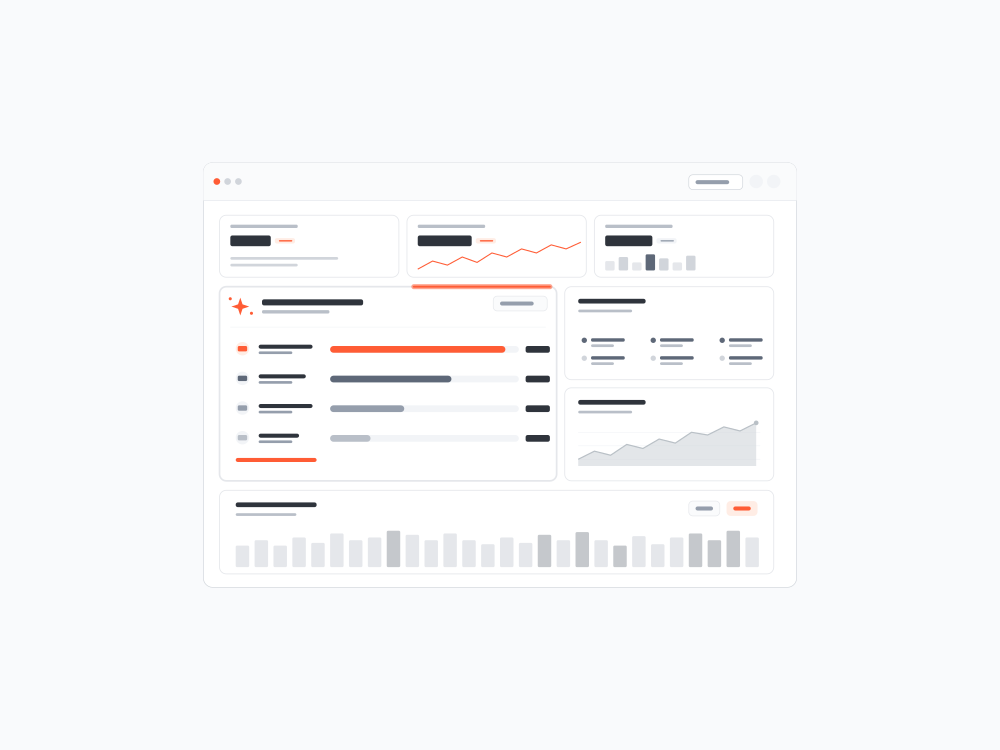
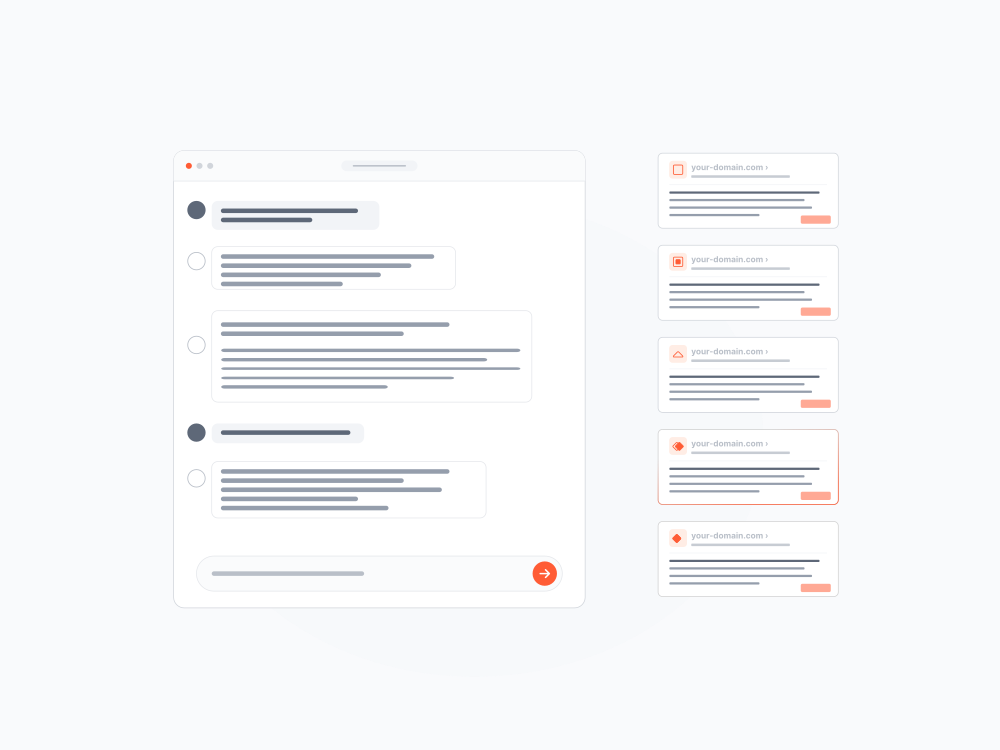
The domain has authority. The content ranks. But you're not showing up in AI-generated answers the way the rankings would predict. That gap usually comes from one of three things: structural issues that make content hard for AI to parse, high-value content locked behind forms or PDFs, or authority signals that don't translate from search rankings to AI trust. We diagnose the gap and build what closes it.
The RAB2B difference
GEO designed by the agency that builds the rest of the system.
Most agencies treat GEO as a content task or an SEO extension. We design it as part of the full visibility strategy: SEO, content, paid and brand authority working together, built on the platform your team already uses. The GEO work connects to the CRM, feeds the measurement layer and runs alongside the demand gen program rather than as a separate service that shares assets but doesn't share context.


Tell us where you are. We'll help you see what's possible and how we'd build it. No pitch. Just a clear picture of where to start.


Steve Cabrera
Schedule a meeting with Steve to discuss your current infrastructure and project goals.
We're on it.
Thanks for telling us where you are. Steve and the team will dig into your setup and reach out within a business day with a clear picture of what the build looks like.
In the meantime, keep an eye on your inbox.